Published by Christopher J. Holley | Mopar History & Tech | July 2026
There is a moment every Mopar enthusiast eventually experiences.
You are standing next to a 426 Hemi Road Runner. The hood is open. The orange engine sits there with those massive valve covers, dual four-barrel carburetors, and the reputation of a legend. Someone asks the inevitable question:
“Is it a four-speed?”
If the answer is yes, heads nod with approval. The four-speed has always represented the purest muscle car experience; the driver, the clutch pedal, the shifter, and 425 horsepower waiting to be unleashed.
But if the answer is:
“No, it is a Torqueflite,” many people immediately assume the car gave something up.
That assumption is one of the biggest misconceptions in the Mopar world.
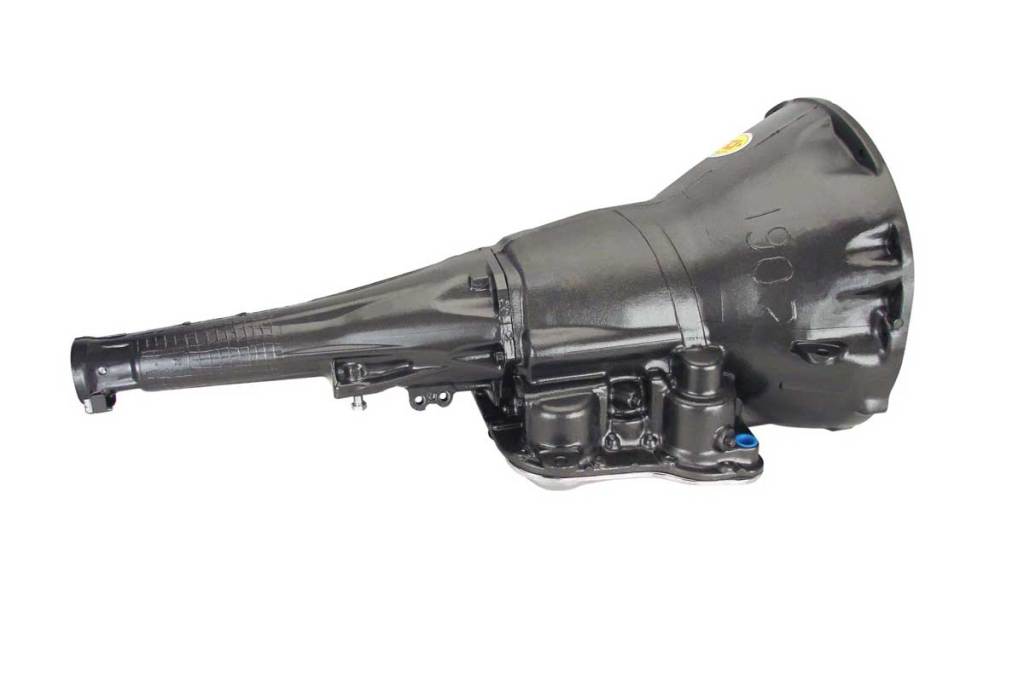
The 727 Torqueflite was not installed in Hemi cars because Chrysler wanted to make them easier for people who could not handle a four-speed. It was installed because Chrysler engineers understood something important:
The fastest combination is not always the one with the most driver involvement. Sometimes it is the one that delivers the engine’s power most efficiently and consistently.
The battle between the A-833 four-speed and the 727 Torqueflite was never really about which transmission was better.
It was about two different approaches to performance.
The Numbers Tell a Different Story
When the magazines tested 1968 Hemi Road Runners, the results surprised many people. The difference between manual and automatic cars was not the dramatic gap many enthusiasts expected.
A typical Hemi four-speed Road Runner was capable of quarter-mile times in the mid-13-second range, generally around 13.4 to 13.6 seconds at approximately 105 to 107 mph.
The Torqueflite-equipped Hemi Road Runner was right behind it, commonly running around 13.5 to 13.8 seconds at roughly 104 to 106 mph. Interestingly, I have two elapsed time (ET) slips that show the Road Runner ran 13.24 at Milan Dragway and 13.36 at Detroit Dragway, both in 1974.
That is not a transmission-length victory.
That is the difference between a good launch and a great launch. A slightly better shift. A small change in track conditions. A driver finding the perfect combination.
The surprising truth was that Chrysler had created two cars that were nearly equal in straight-line performance but completely different in personality.
Why the Four-Speed Was the Hero
The A-833 four-speed had everything enthusiasts loved about muscle cars.
It connected the driver directly to the engine. Every shift was mechanical. Every gear change was an opportunity to keep the Hemi exactly where it wanted to be.
There was no torque converter absorbing power. No hydraulic controls making decisions. The driver was responsible for everything.
And that was part of the appeal.
A well-driven Hemi four-speed car was a violent, mechanical experience. The clutch engaged, the rear tires fought for traction, the engine climbed through the rpm range, and the driver physically controlled the entire event.
But there was a price.
The Hemi was not a forgiving engine. It made huge power, but it rewarded precision. The driver had to balance clutch engagement, throttle position, traction, and shift timing.
A missed shift or poor launch could turn a winning combination into a losing one.
The four-speed gave the driver the ability to extract every bit of performance.
It also gave the driver the ability to make mistakes.
Why the Torqueflite Was the Weapon
The 727 Torqueflite took a completely different approach.
Instead of asking the driver to manage the engine’s power, it used engineering to make that power easier to deliver.
At launch, the torque converter multiplied engine torque, allowing the Hemi to reach its power range quickly. The converter absorbed shock, helped manage traction, and provided a repeatable launch every time.
Then the transmission shifted.
Perfectly.
Again.
And again.
That consistency was the Torqueflite’s greatest advantage.
On the street, it meant the driver could simply apply the throttle and let the Hemi do what it was designed to do.
At the drag strip, it meant something even more important:
Repeatability.
A four-speed driver might make one perfect pass and one average pass.
A Torqueflite car was far more likely to make the same pass every time.
That difference mattered when winning races came down to fractions of a second.
The Racing World Eventually Answered the Question
The showroom argument favored the four-speed.
The racing world increasingly favored the automatic.
As horsepower levels increased and racers demanded more consistency, the Torqueflite became the preferred choice for many serious competitors. The automatic eliminated missed shifts, reduced driver variables, and handled tremendous torque loads.
The transmission that some enthusiasts considered less exciting became one of the most respected performance transmissions ever produced.
The 727 did not win because it was easier.
It won because it worked.
The 1968 Hemi Road Runner: Two Personalities, One Legend
A Hemi Road Runner with an A-833 four-speed represented everything people loved about the muscle car era.
It was aggressive.
It was demanding.
It required involvement.
The driver was part of the machine.
A Hemi Road Runner with a 727 Torqueflite represented something different.
It was efficient.
It was consistent.
It allowed Chrysler to put one of the most powerful engines of the era into the hands of more drivers while still delivering brutal performance.
The four-speed was the transmission teenagers dreamed about.
The Torqueflite was the transmission that surprised them.
The Truth About the “Automatic Hemi”
For decades, the automatic Hemi car was sometimes viewed as the lesser version; the car chosen by someone who did not want the challenge of a four-speed.
The performance numbers prove otherwise.
A Torqueflite-equipped Hemi Road Runner was not a compromise.
It was a carefully engineered combination designed to get maximum performance from one of Chrysler’s greatest engines.
The A-833 and 727 represented two different philosophies.
One put the driver in control.
The other made the car itself more effective.
And that is why, more than 50 years later, the debate continues.
Because with a 426 Hemi under the hood, either transmission created something special.


Leave a Reply