Published by Christopher J. Holley | Mopar History & Tech | October 2026
From economical Slant Six transportation to big-block performance, the 1967 Dodge Dart demonstrated how much potential Chrysler could pack into its compact A-body platform.
In the mid-1960s, the American automotive industry was changing rapidly. Buyers still wanted economical, practical transportation, but the growing popularity of performance cars was creating demand for vehicles that combined compact dimensions with genuine horsepower. Chrysler Corporation was well positioned to meet both needs with the Dodge Dart.
For 1967, the Dart entered a new chapter in its development. Revised styling, structural improvements, a range of proven engines, and the introduction of the high-performance Dart GTS made it one of the more versatile compact cars in the Dodge lineup. It could serve as dependable daily transportation or, with the right powertrain, become a serious performance machine.
A New Look for the A-Body
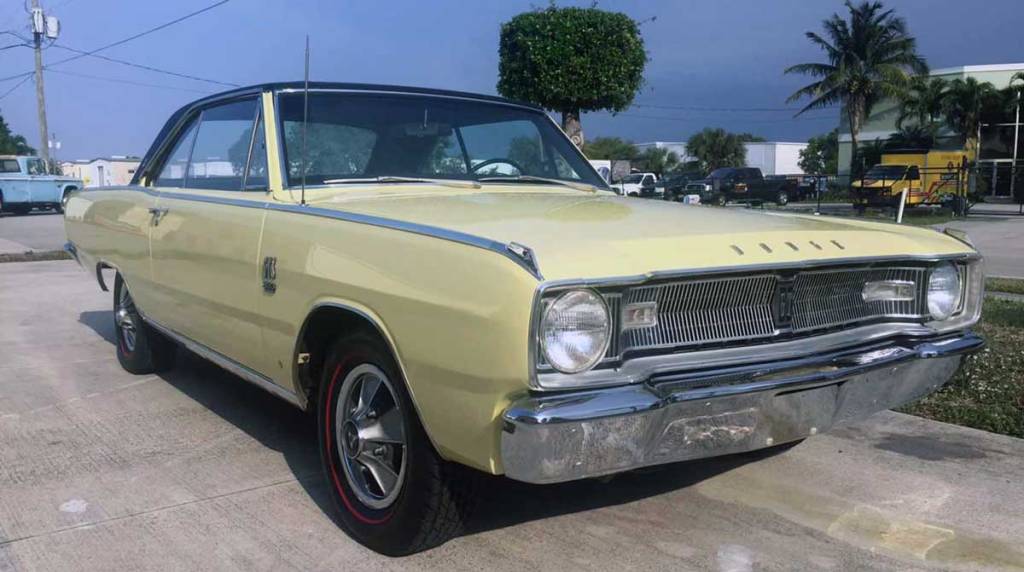
The 1967 Dart retained the basic A-body platform but received distinctive exterior styling. Its recessed center grille, projecting headlamp sections, revised body contours, and updated rear styling gave the compact Dodge a more contemporary appearance.
The model range offered something for a broad range of buyers. The Dart 170 emphasized affordability, while the Dart 270 added comfort and convenience. The sportier Dart GT appealed to buyers who wanted a more stylish compact, with body styles that included the two-door hardtop and convertible.
The real performance story, however, was only beginning to emerge.
Chrysler also made significant engineering changes for 1967. Revised front-end structure and suspension packaging accompanied the redesigned body, while safety improvements included a collapsible steering column, additional interior padding, and a dual-circuit hydraulic brake system. These changes reflected the industry’s growing attention to occupant protection and the demands of evolving federal safety requirements.
Six-Cylinder Dependability and Small-Block Performance
One of the Dart’s greatest strengths was its selection of engines. Buyers could choose from the 170- and 225-cubic-inch Slant Six engines or step up to the 273-cubic-inch LA-series V8.
The Slant Six had earned a reputation for durability and practical operation. Its inclined cylinder arrangement allowed Chrysler to achieve a relatively low hood line while maintaining useful service access. The 225 delivered strong low-speed torque and became one of the company’s most enduring powerplants.
For drivers seeking more performance, the 273 V8 provided a compact alternative. Introduced for 1964, the LA-series small-block combined relatively light weight with a design that would eventually become one of Chrysler’s most important engine families.
The 273 was available in several configurations. The standard two-barrel version was rated at 180 gross horsepower, while the four-barrel 273 Commando was rated at 235 gross horsepower. The Commando package gave the Dart a noticeably sportier personality without the additional weight and packaging complications associated with a big block.
During this period horsepower figures were measured using the gross-rating system and should not be compared directly with modern net horsepower ratings.
The Dart GTS: Big-Block Ambitions in a Compact Package
The most remarkable performance development for 1967 was the introduction of the Dart GTS. Arriving late in the model year, the GTS brought a 383-cubic-inch B-series big-block V8 to Chrysler’s compact platform.
Rated at 280 horsepower and 400 lb.-ft of torque in the Dart, the 383 gave the relatively lightweight Dodge substantial performance potential. The combination reflected the muscle-car philosophy of the period: install a large engine in a smaller car and let displacement do much of the talking.
However, fitting a big block into the Dart was not without compromises. Engine-bay clearance, exhaust-manifold packaging, steering arrangements, and front-end weight presented challenges that did not exist to the same degree in larger Dodge models. Power steering was not available with the original 383 installation.
The engine’s advertised output was also lower than that of comparable 383-powered Dodge intermediates. Packaging and exhaust restrictions were important considerations, illustrating that engine displacement alone does not determine performance.
The late introduction of the GTS limited production. It remains a relatively uncommon variation of the 1967 Dart, particularly when compared with the more numerous six-cylinder and small-block models.
For 1968, Chrysler continued developing the concept, with the 340-cubic-inch small-block becoming the standard GTS engine. The 340 offered an attractive combination of performance, reduced weight, and more manageable packaging, helping establish the Dart as a serious contender in the compact performance market.
An A-Body with Lasting Potential
The Dart’s appeal did not end when it left the showroom. Its relatively compact dimensions, conventional mechanical layout, and broad engine compatibility made the A-body platform attractive to enthusiasts interested in restoration, street performance, and drag racing.
The same characteristics that made the Dart practical in the 1960s continue to make it appealing today. The Slant Six remains an example of durable, straightforward engineering. The 273 offers a historically appropriate V8 combination, while later LA-series small-blocks and big-block conversions provide opportunities for substantially greater performance.
Yet the Dart also demonstrates an important principle of automotive engineering: a successful performance modification involves more than installing a larger engine. Exhaust routing, manifold design, steering clearance, cooling capacity, suspension geometry, and weight distribution all influence the result.
That is particularly evident when comparing the 273-powered GT with the 383-powered GTS. Both represent legitimate approaches to performance, but each requires a different balance of packaging, weight, airflow, and drivability.
A Compact Dodge That Deserves Recognition
The 1967 Dodge Dart occupied an important position in Chrysler’s product lineup. It was economical enough to appeal to everyday buyers, comfortable enough to serve as a personal car, and adaptable enough to become the foundation for a legitimate performance vehicle.
The Dart never needed the size or visual drama of a Charger to make its point. Its strengths were rooted in versatility, mechanical simplicity, and the possibilities offered by the A-body platform.
More than half a century later, the 1967 Dart remains an appealing example of the period when American manufacturers were discovering just how much performance could be extracted from a compact car. Whether equipped with a dependable Slant Six, a high-revving 273 Commando, or the formidable 383 big-block, the Dart represented a distinctly Mopar approach to combining practical engineering with performance ambition.


Leave a Reply